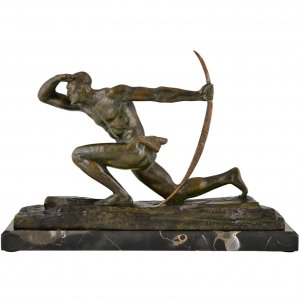
Pierre Le Faguays & Raymonde Guerbe: Art Deco Sculptors
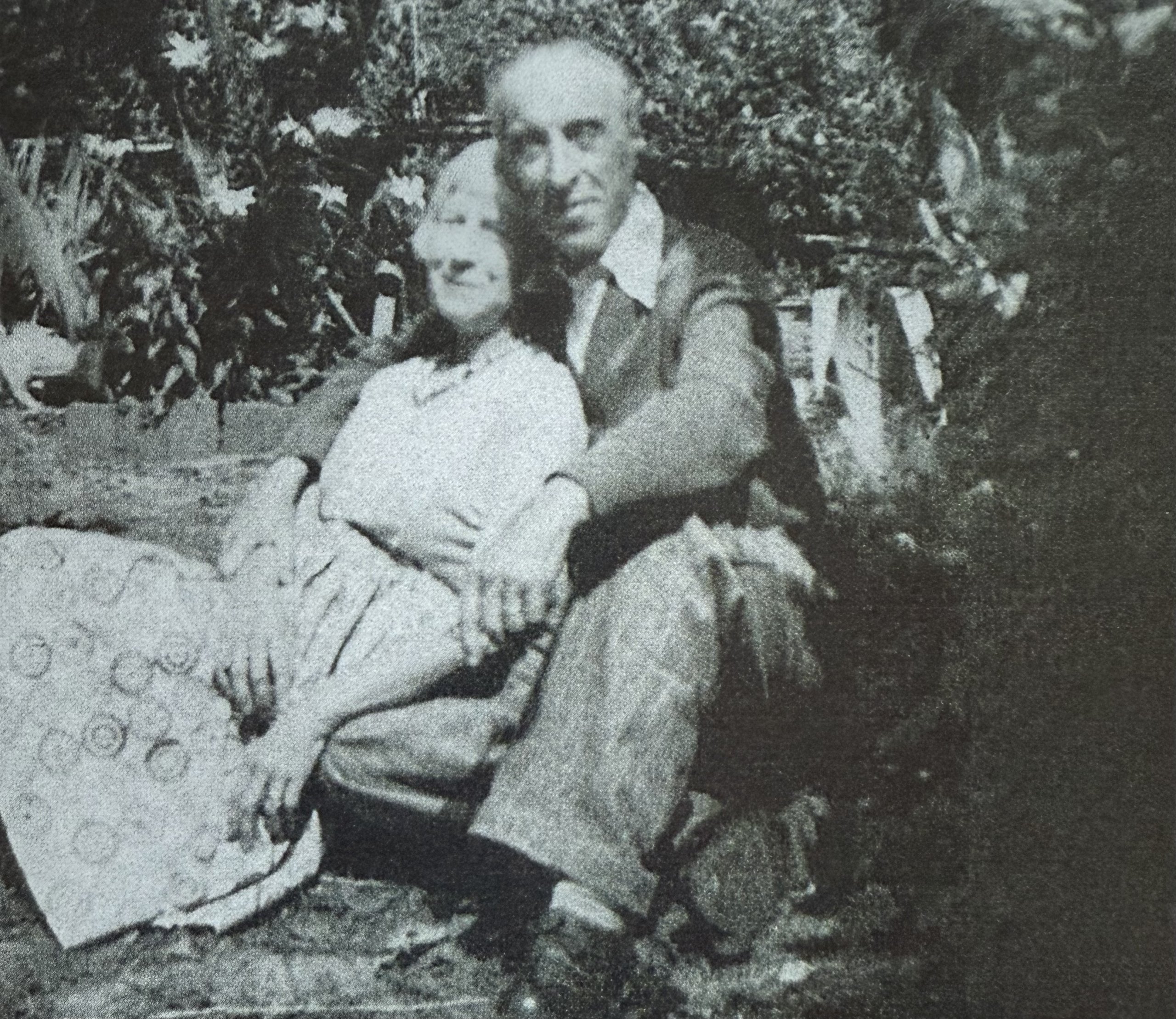
Two artists, one vision: the story of Pierre Le Faguays and Raymonde Guerbe
Some artists elevate each other, not through competition, but through connection.
That was the case for Pierre Le Faguays and Raymonde Guerbe, partners in life and in bronze. Together with their friends Max Le Verrier and Marcel Bouraine, they formed a quartet that helped shape the Art Deco movement.
But today, let’s focus on the duo Le Faguays–Guerbe: who were they, how did they work, and what made their collaboration so special? Who were these two Art Deco sculptors whose works remain cherished by collectors around the world?
View our collection of Pierre Le Faguays sculptures.
A life in sculpture: the biography of Pierre Le Faguays
Pierre Le Faguays was born in Nantes in 1892 and studied under James Vibert at the École des Beaux-Arts in Geneva. There, he formed lifelong bonds with Max Le Verrier and Marcel Bouraine, friendships that would remain both artistically and personally significant.
His first major public exhibition took place in 1922 at the Salon de la Société des Artistes Français. In the years that followed, he received several honorary mentions and became a respected figure in the Parisian art world.
Le Faguays worked under his own name as well as the pseudonyms Fayral and Pierre Laurel.
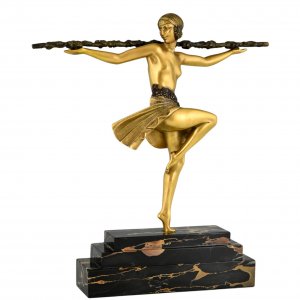
His oeuvre was remarkably diverse, from monuments and lamps to dynamic dancers in bronze, ceramics, metal, or terracotta. His style was pure Art Deco: elegant, powerful, and full of movement.
He often worked with live models, which gave his sculptures a striking sense of vitality.
In his personal life, he took a few detours. He had a daughter with his model Georgette Hugot, but eventually found lasting love with his student Raymonde Guerbe, whom he married in 1921. They lived and worked together in Fontenay-les-Briis for more than forty years, inseparable until his death in 1962.
What materials did Le Faguays use for his sculptures?
- Bronze
- Ivory
- Art Metal
- Terracotta
- Ceramic
- Alabaster
Raymonde Guerbe: more than a muse
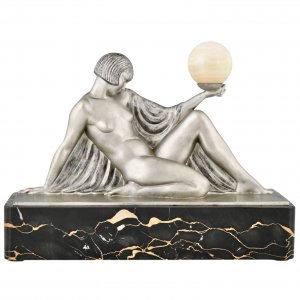
Raymonde Guerbe, who also used the name Andrée Guerval, was born in Paris in 1894 and was an artist in her own right. Around 1919, she took dance lessons at Isadora Duncan’s school, where she developed a sense of elegance and rhythm that would later define her sculptures. During that same period, she met Pierre Le Faguays, who became both her mentor and, later, her husband. Their partnership was as intimate as it was creative.
Guerbe was not a shadow of her husband, but an autonomous artist with a distinct signature and career.
She exhibited at the Salon d’Automne between 1923 and 1938, presenting ebony female figures, sculptures in polished copper, and works in stone. Her bronze and ivory pieces were produced by renowned publishers such as Les Neveux de Lehmann, Susse Frères, Etling, and Max Le Verrier. Although she frequently collaborated with Pierre, it’s important to note that works signed Guerbe or Guerval are truly her own creations.
She was also a painter, model, and muse. But above all, she was a woman who quietly left her mark on Art Deco. Her figures express grace, strength, and femininity, deserving a place beside her husband’s work, not beneath it.
Her work holds a rightful position within Art Deco sculpture as that of an independent artist with a recognizable style.
Discover our authentic sculptures by Raymonde Guerbe.
A marriage in bronze: collaboration and shared artistry
What made Pierre and Raymonde so special was how naturally their lives and work intertwined. They lived and worked together in their home in Fontenay-les-Briis, where studio and life blended into one.
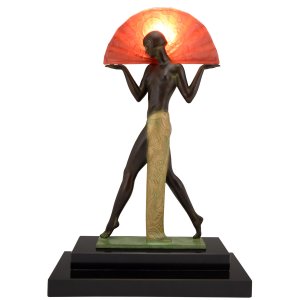
Raymonde often posed for Pierre’s sculptures, and her background as a dancer gave his figures a sense of flow and grace. Many of his most famous female sculptures owe their poses directly to her.
But it wasn’t a one-way exchange. They worked side by side, in terracotta, plaster, marble, ceramic, bronze, and alabaster , each in their own style, but clearly within each other’s artistic orbit. Their works share the same attention to anatomy, movement, and emotion. In 1927, Raymonde even won first prize for sculpture in the Robi competition, truly a recognition of her independent talent.
Their shared studio was a place of dialogue, inspiration, and craftsmanship. Financially, they also prospered, even owning a chic, foldable Citroën H4.
But the most precious thing they shared was not material: it was their shared vision of beauty, form, and connection.
Friendship as creative foundation: the quartet with Le Verrier and Bouraine
The story of Pierre Le Faguays and Raymonde Guerbe cannot be told without the two men who surrounded them: Max Le Verrier and Marcel Bouraine. What connected them was more than education or collaboration, it was a profound friendship that began in Geneva and lasted long after their deaths. They studied together, gained fame together, and are even buried together in the cemetery of Fontenay-les-Briis.
The strength of their bond lay in their shared ideals: beauty, rhythm, and craftsmanship.
As Max later described it:
“We all worked in the same spirit and had the same ideals. I loved my dear friends dearly and I thank life for the advantage of this friendship.”
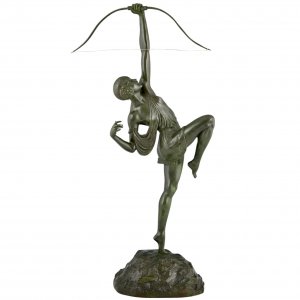
That sense of unity resonates in their work, in the elegance of a dancer, the tension of an amazon, the power of a silhouette.
Technically, they shared foundries, models, and materials. Artistically, they were each other’s mirror. But above all, they were a beacon for one another in a time that was often unpredictable for artists. Their friendship was their foundation, you can still feel it in their work today.
What art truly reveals
When you look at a sculpture by Le Faguays or Guerbe, you see more than form or technique.
You see a shared life, a shared studio, and a love made tangible in bronze. And you sense the echo of a friendship that made four artists greater together than they could ever have been alone.
Perhaps that’s what makes their works timeless: they are not silent objects, but living testaments to connection.
Frequently Asked Questions about Le Faguays and Guerbe
How can I recognize an original Le Faguays or Guerbe?
Look for the signature, material (such as bronze or art metal), finish, and provenance. At Deconamic, each piece comes with a certificate of authenticity and detailed documentation.
Are Guerbe’s sculptures as valuable as Le Faguays’?
Yes. Although she long stood in her husband’s shadow, appreciation for her independent work has grown significantly. Her sculptures are technically refined, feminine, and highly sought after by collectors.
Can I purchase their works at Deconamic?
Absolutely. We offer a carefully curated collection of original Art Deco sculptures by Le Faguays and Guerbe. Browse our collection or contact us for expert advice.
What does ‘pseudonym’ mean?
A pseudonym is another name an artist uses to sign their work. Le Faguays, for example, used Fayral for his metal pieces.
Interested or do you have questions?
Looking for an authentic piece by Pierre Le Faguays or Raymonde Guerbe?
Feel free to contact us. We’ll be happy to help you find the perfect addition to your Art Deco collection.