Sculptures

Filter

Loading...

No More Products

Max Le Verrier sculptures: Art Deco pieces full of movement, style and character

Looking for Max Le Verrier sculptures that instantly add atmosphere to your interior? You’re in the right place. The sculptures in our collection are typically Art Deco: clean lines, a strong stance, and a finish that feels warm and luxurious.

At Deconamic, you’ll find Max Le Verrier sculptures such as dancers, animals (especially panthers) and athletic figures. These sculptures are made of patinated metal and set on a black marble base. That combination is exactly what makes the Art Deco look so recognisable.

Good to know: in the product details you’ll often see “posthumous cast” and “with certificate of authenticity”. This means the piece was cast in the Le Verrier foundry as a contemporary casting, using the original moulds and the original design. Guaranteed by Deconamic, with documentation and certificate.

Also explore our Max Le Verrier lamps and Max Le Verrier bookends for the same Art Deco vibe.

What makes Max Le Verrier sculptures so special?

Max Le Verrier was a renowned French sculptor from the Art Deco era. His sculptures still feel modern today, even though they were designed almost 100 years ago. That’s mainly due to three elements:

  • Movement: you can see tension in a body, an arm or a step
  • Simplicity: he refined shapes into strong lines (without unnecessary detail)
  • Atmosphere: decorative and powerful at the same time

That’s why Max Le Verrier fits many interiors: classic, eclectic and clean modern.

The three themes in Max Le Verrier sculptures

In this category you’ll mainly come across three themes: dance, animals and sport. Each theme has its own character, making it easier to choose the sculpture that suits you.

1) Dance: graceful, free and still sharply designed

Artists have drawn inspiration from dance for centuries, but the early 20th century brought major change. The Ballets Russes introduced a fresh view on dance, Isadora Duncan put modern dance on the map, and Josephine Baker made an impact with her Charleston in 1925 — and her famous banana skirt.

Max Le Verrier took a different route: his dancers are often more restrained and refer to classical Greek ideals. In his work, the body becomes an almost perfect form.

What you often see in his dancers:

  • A nude figure, so the body line is central
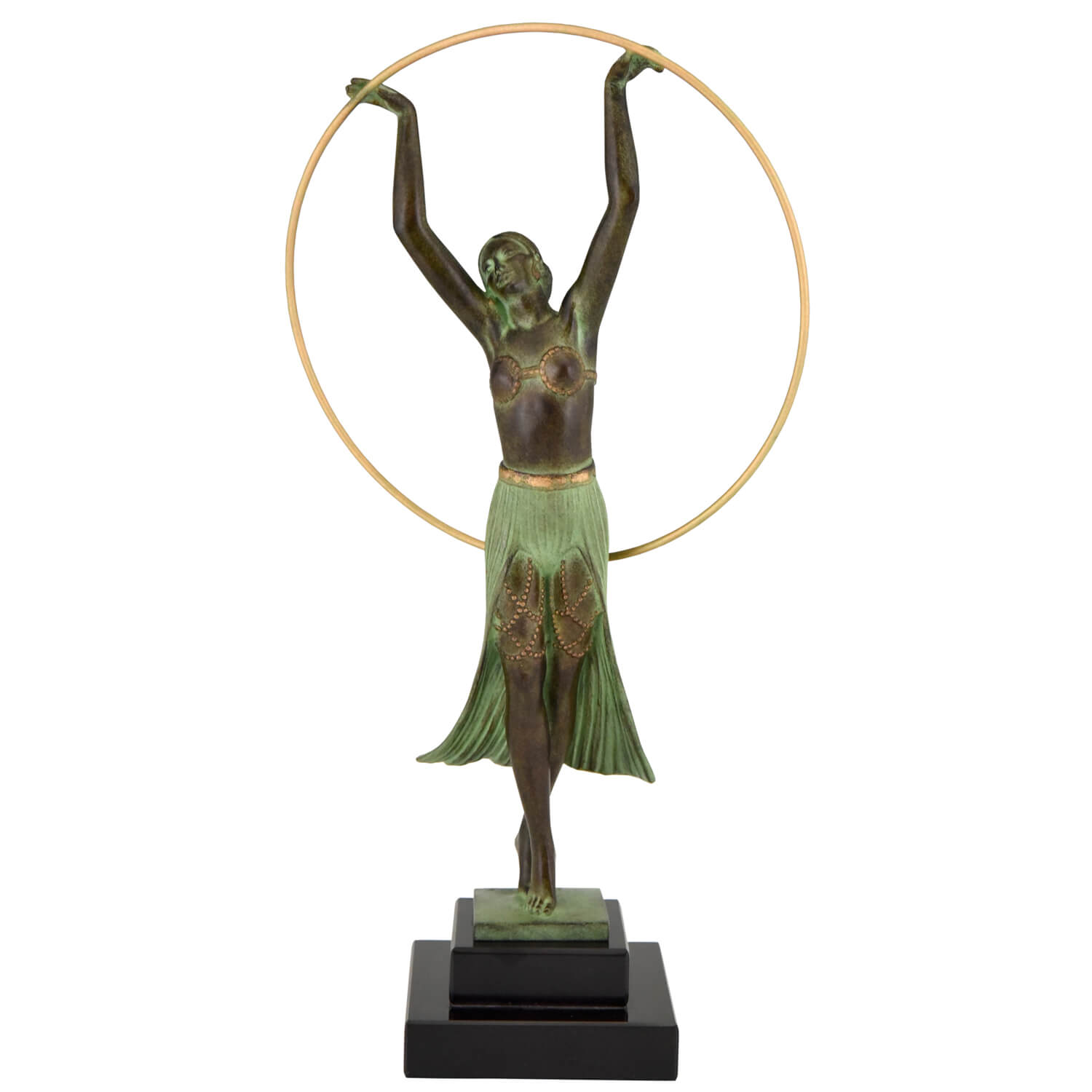
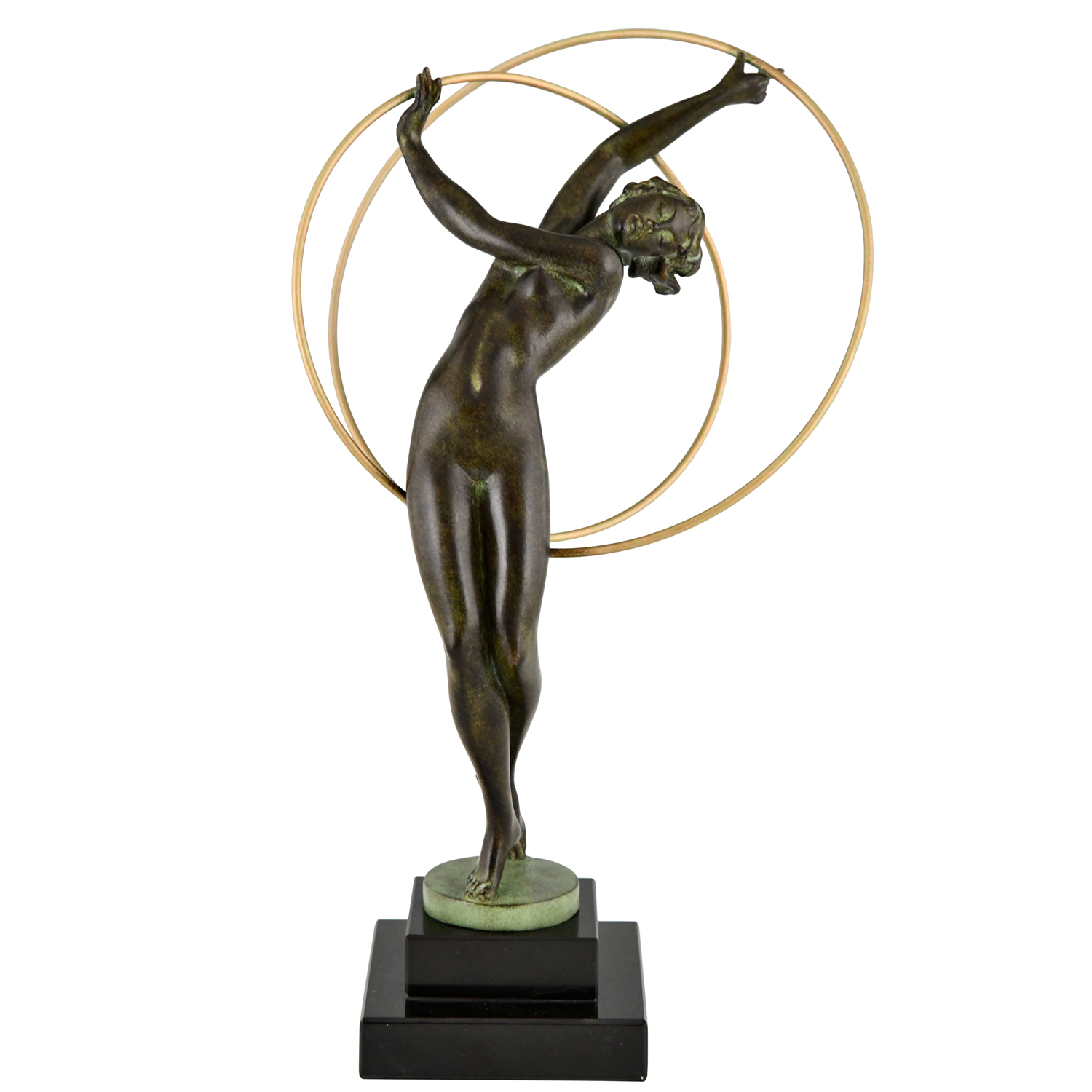
  • A decorative element such as a hoop, ribbon, ball, veil or birds
  • A pose that feels still, yet suggests movement and tension

A few examples from the collection

ALLEGRESSE
A light and elegant dancer: a slender figure in a lifted, playful pose. The posture feels open and airy, as if she’s just finishing a step.

TOURBILLON
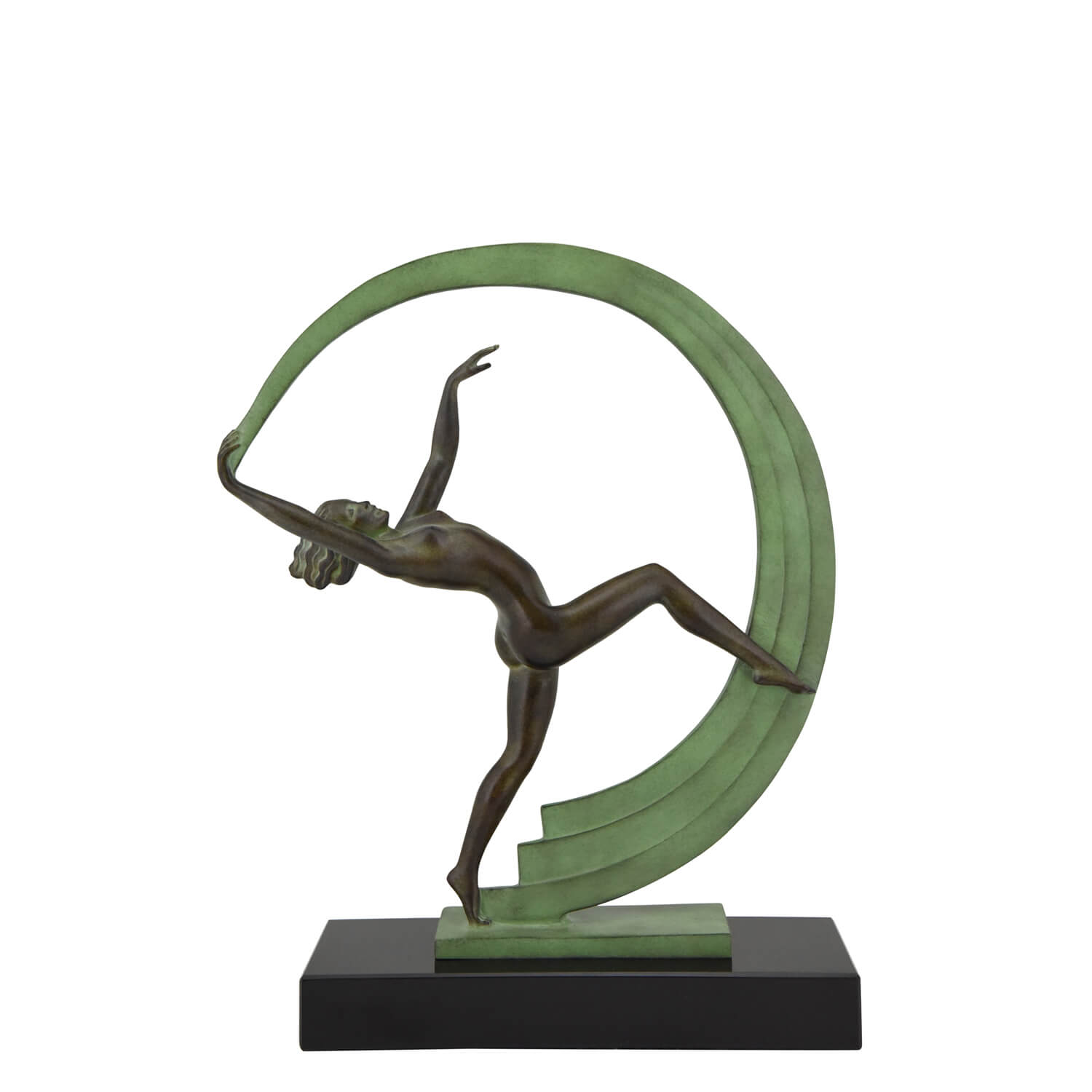
The name says it all: this model “swirls”. You see a dancer in a dynamic pose, with a ribbon creating a spinning play of lines around her body.

JEU and LUEUR
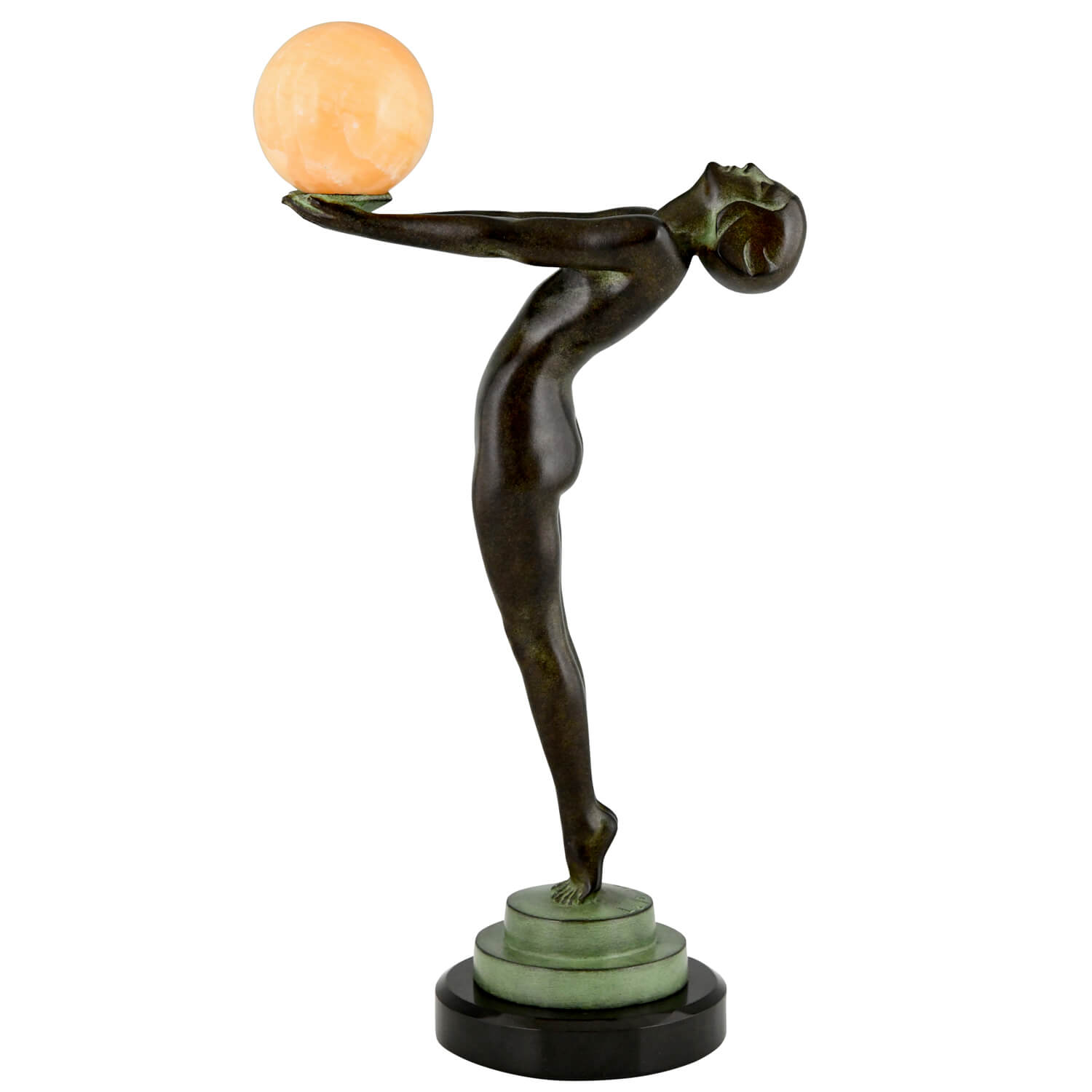
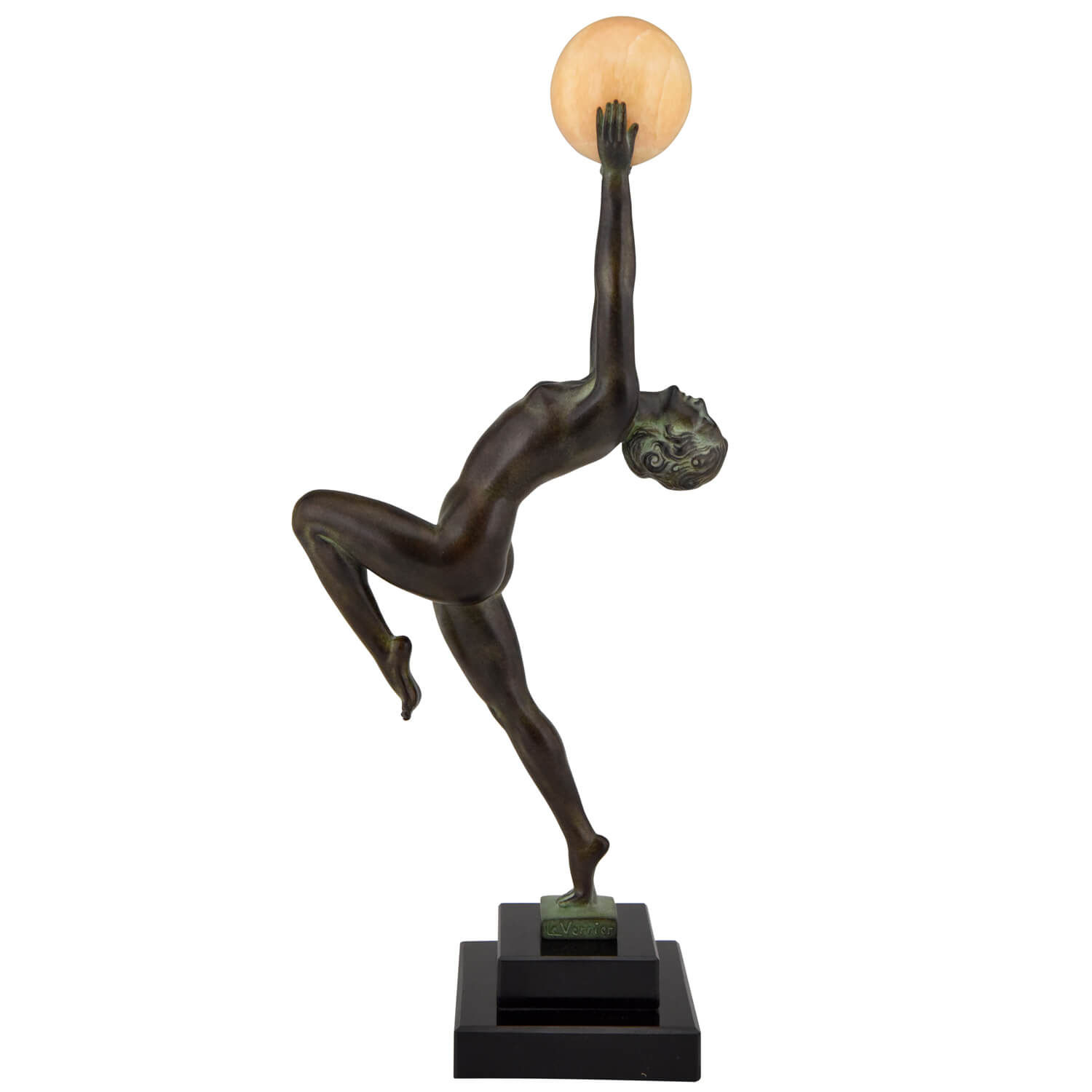
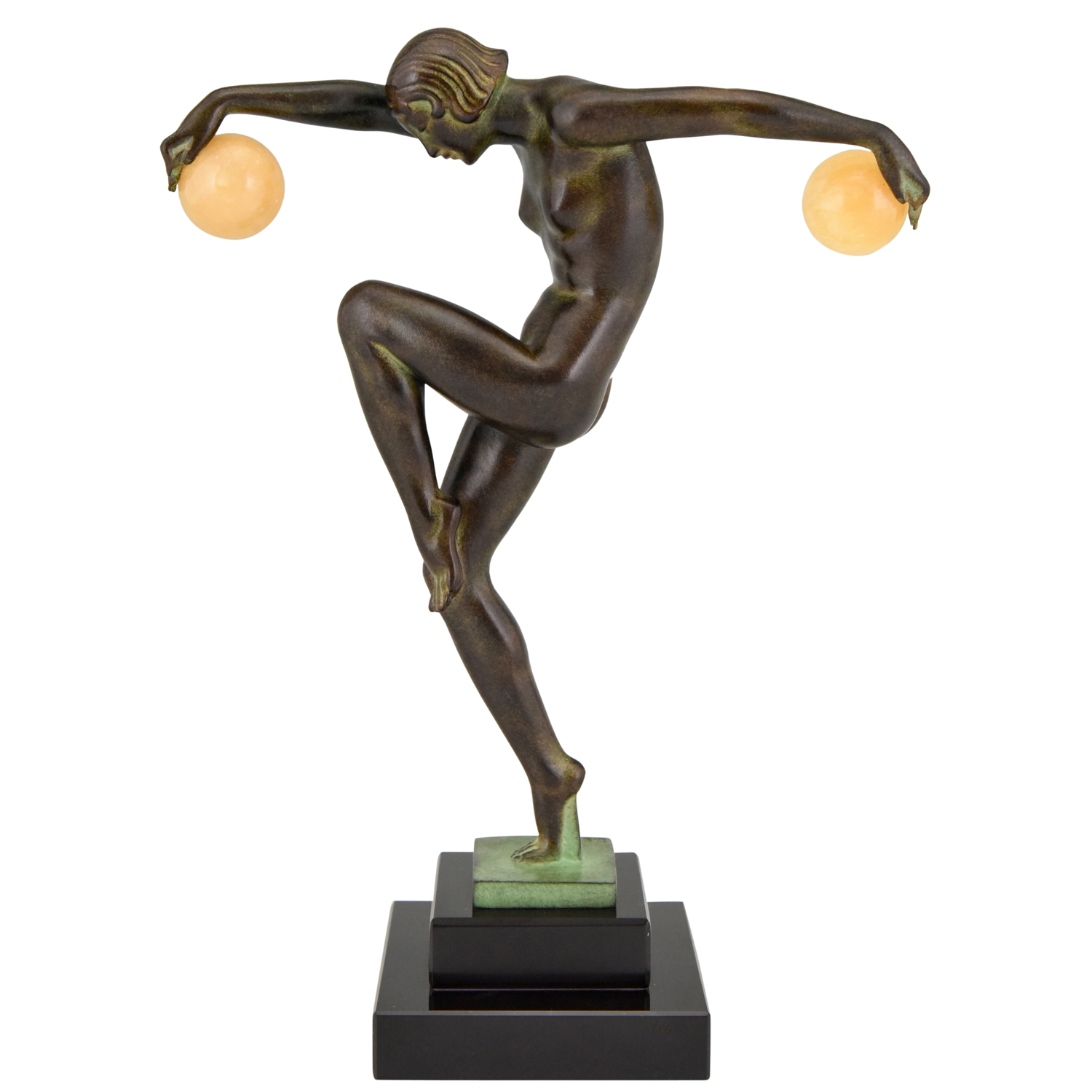
In both pieces you see the human body as pure form on a black marble base. A nude dancer, with a ball as the focal point. The slender, stylised nude stretches out. With extended arms, she holds a ball or sphere forward or upward, creating a strong, almost floating Art Deco line.

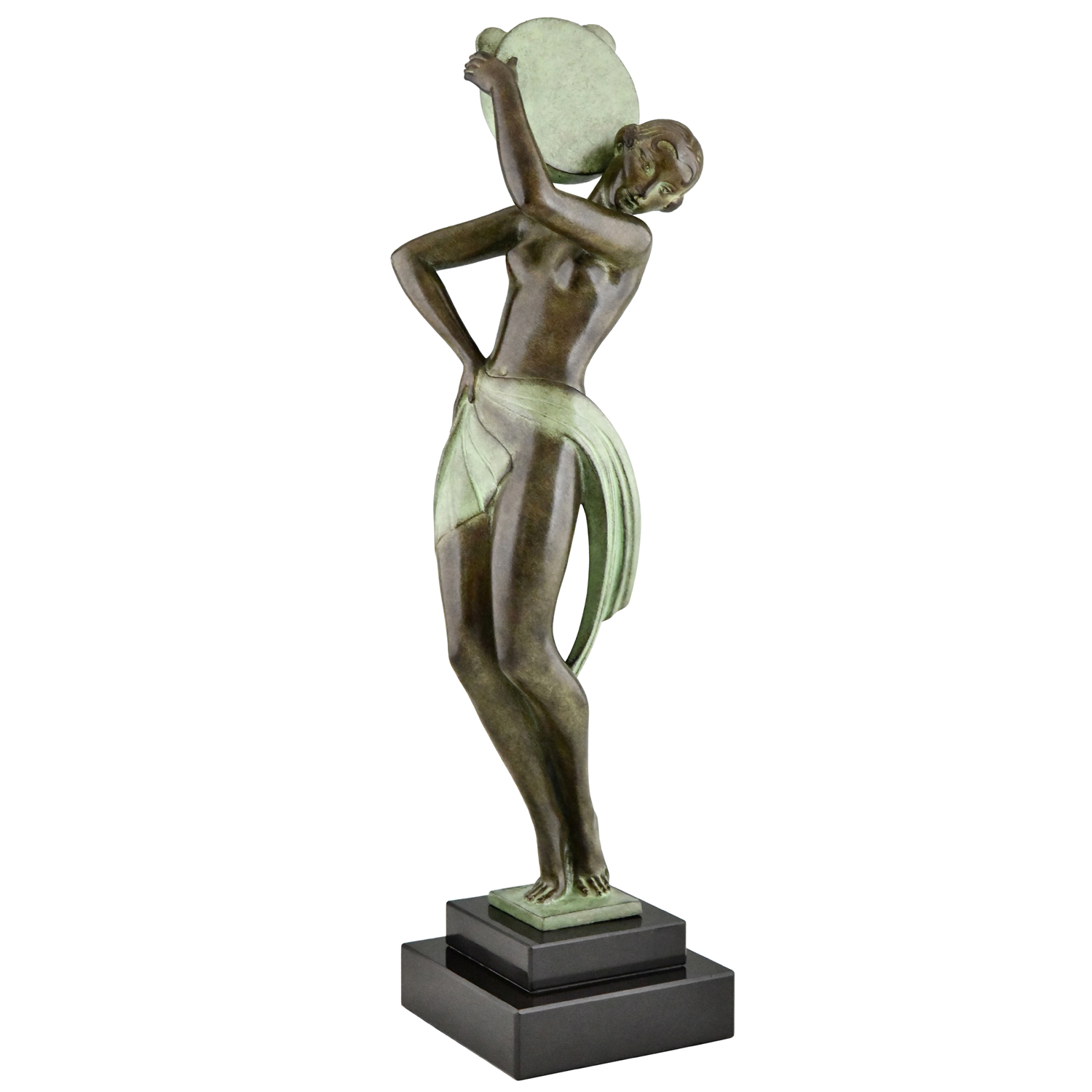
FOLIE
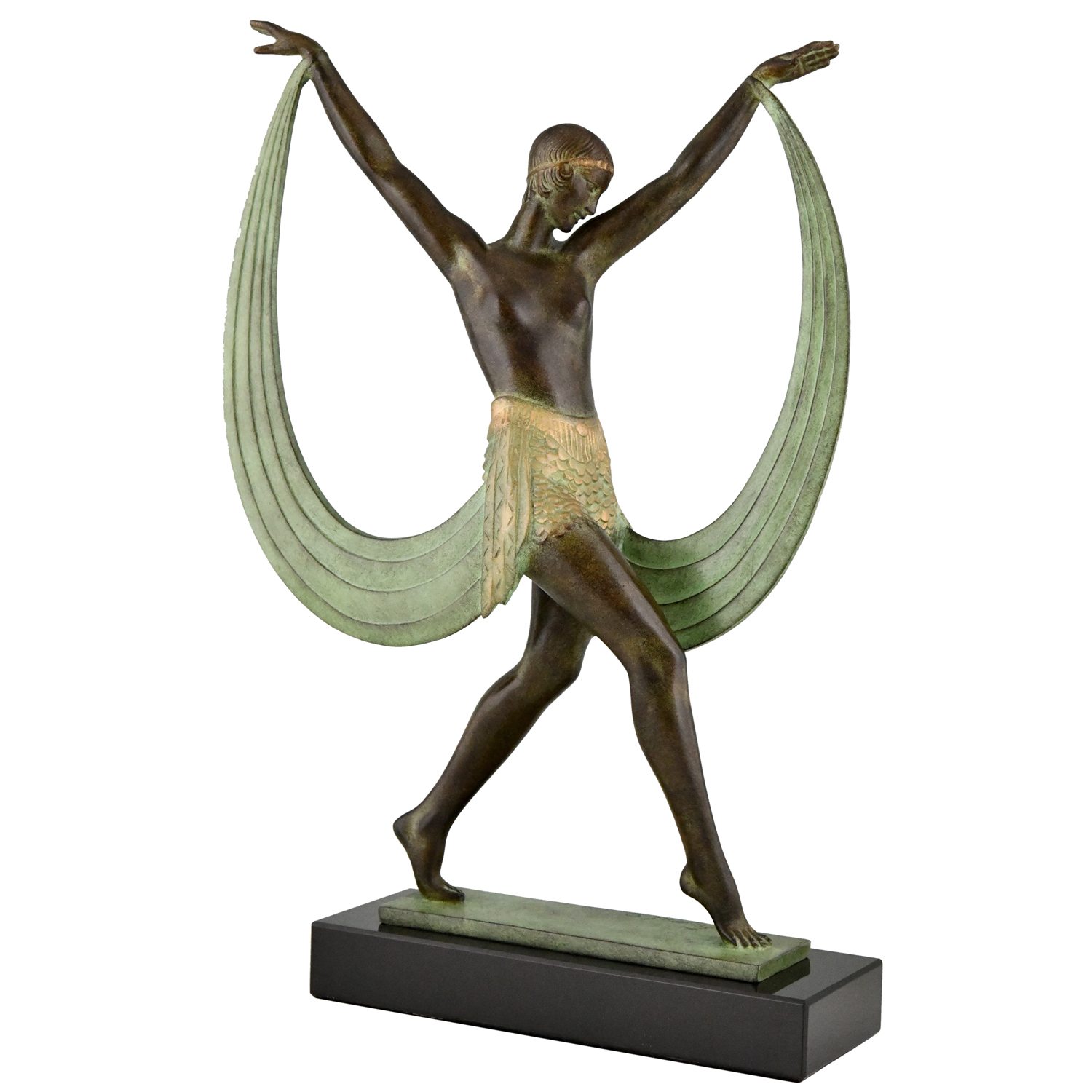
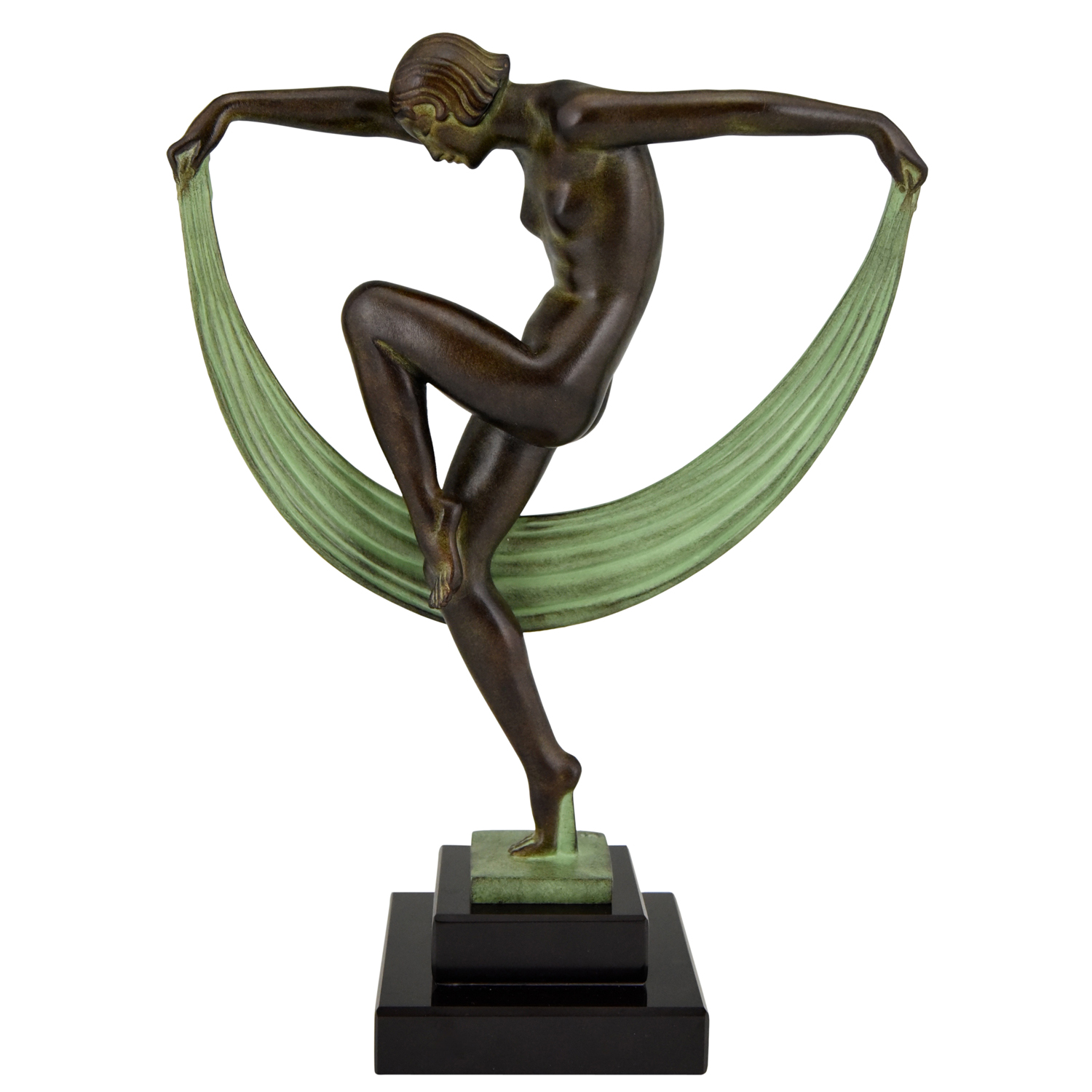
An expressive nude dances in a playful, free attitude, in a graphic and elegant pose. She stands on one leg, while the other is bent, capturing a clear moment of movement. With both arms she holds a long scarf. It hangs in a wide arc beneath her body and works as a decorative line that supports the composition. The head tilts slightly downward, giving the sculpture a restrained feel: graceful, but not exuberant.

2) Animals: panthers and lions with powerful lines

Animals in Art Deco are rarely cute. They are powerful, stylised and often a little mysterious. Max Le Verrier observed animals to capture posture and movement, then simplified the form into a modern Art Deco sculpture.

Examples from the collection

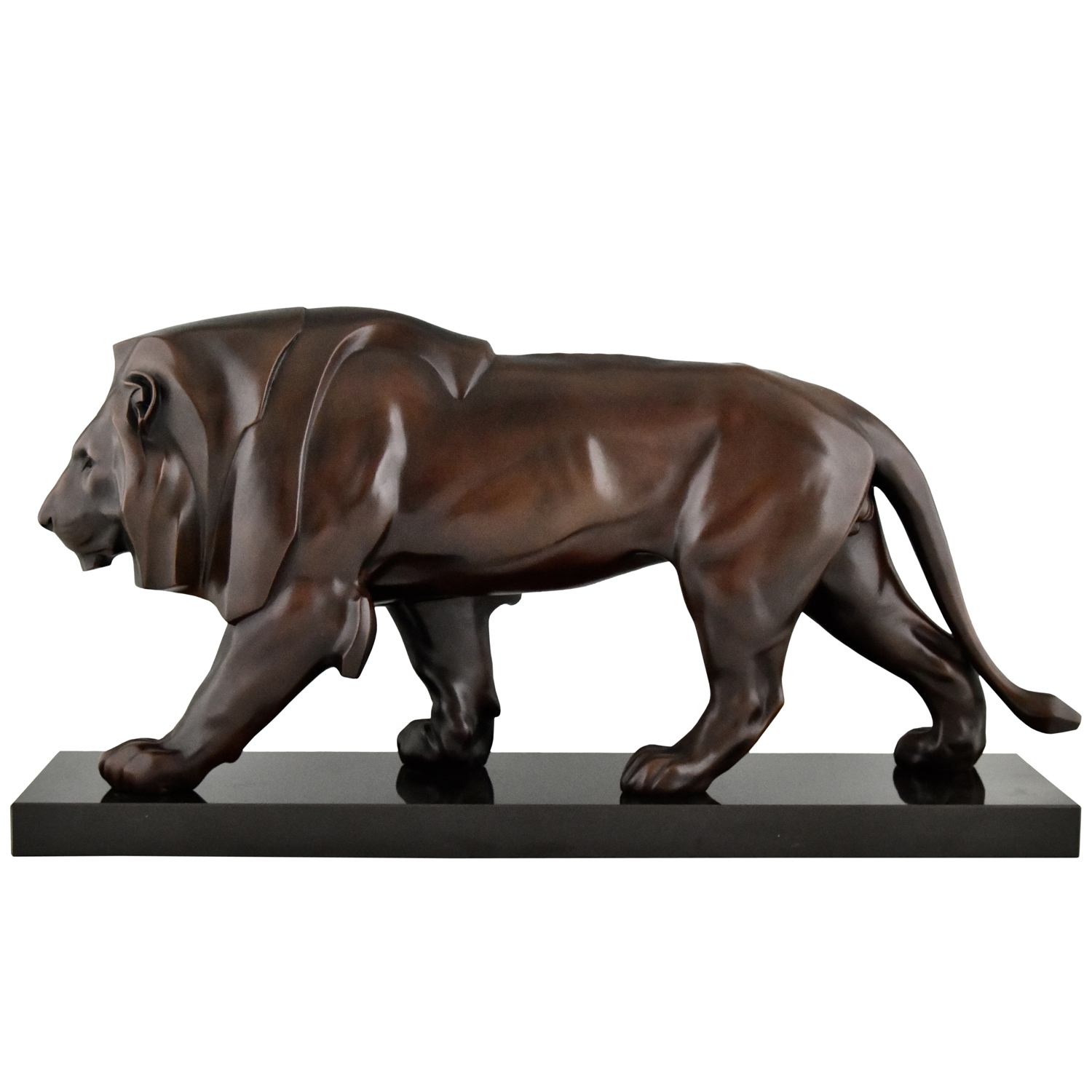
LION
In 1932, Max Le Verrier created his LION in the Jardin d’Acclimatation. With privileged access (a membership card), he could sculpt close to the cages. His goal was morphological accuracy, while still refining the form into a clean Art Deco work.

Panthers: BAGHERA, OUGANDA and JUNGLE
For panthers, preparation was essential. He observed these big cats to record poses and movement. The result: a realistic portrait that is also modern and simplified.

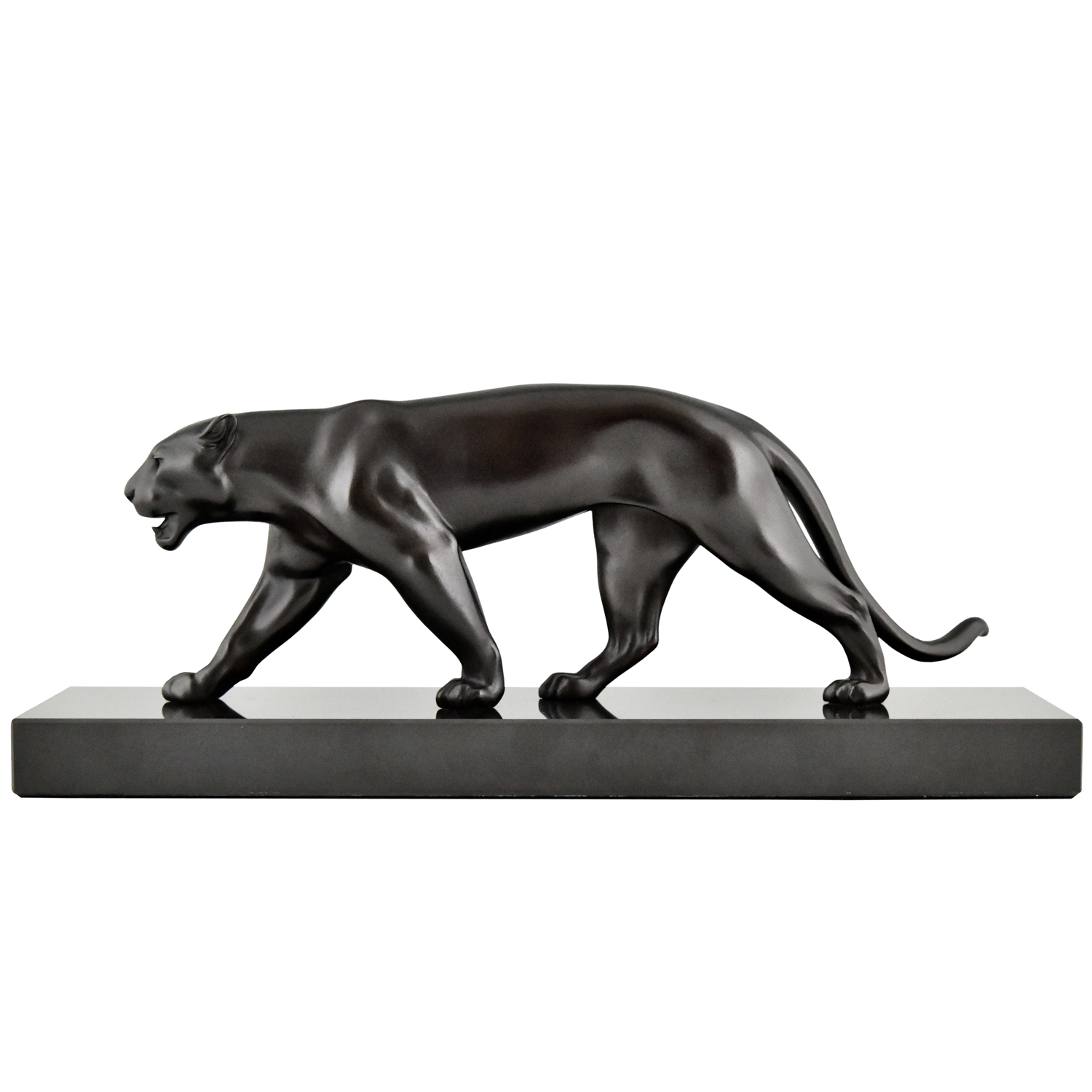
BAGHERA
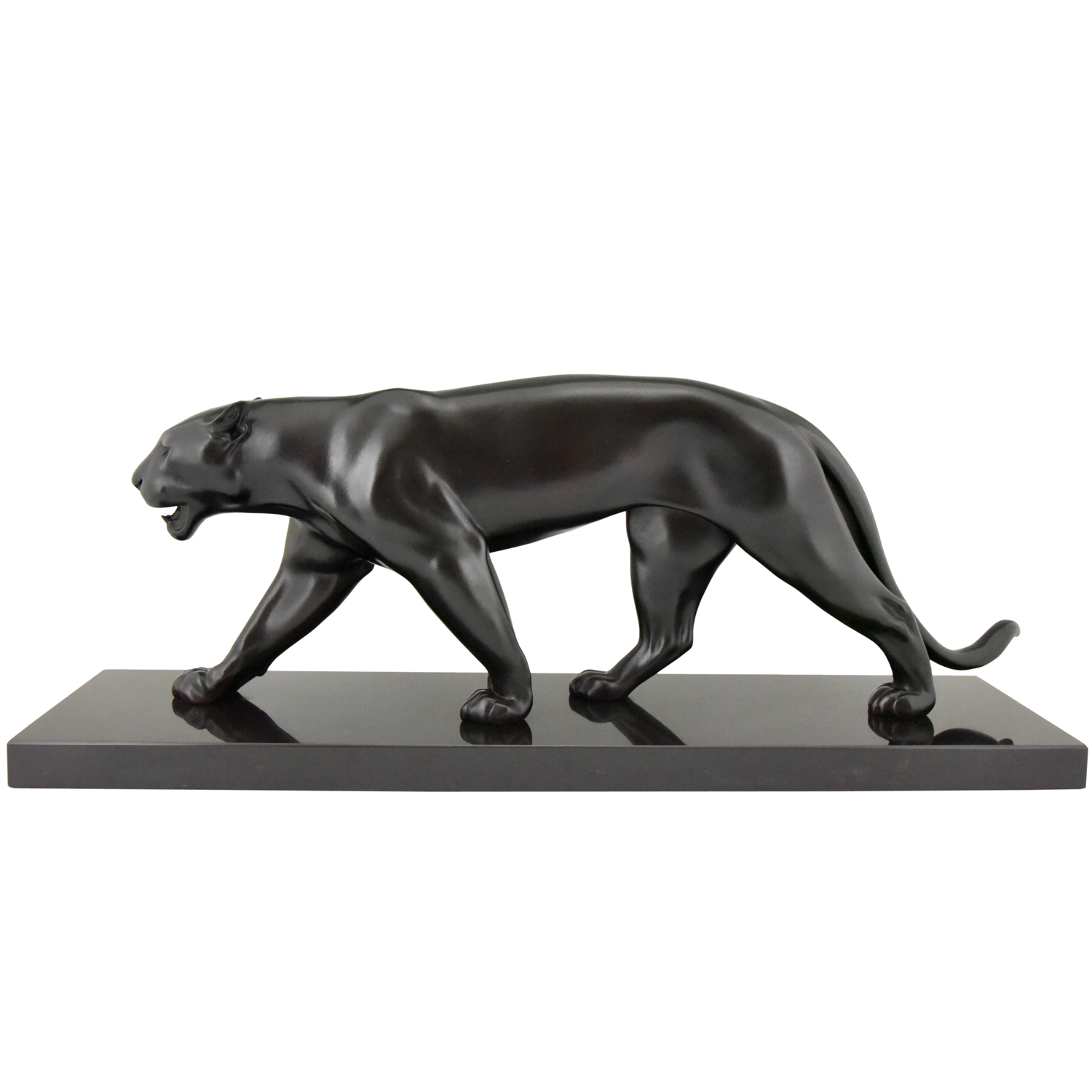
One of his best-known animal sculptures is Baghera, a powerful and elegant panther. A showcase of typical Art Deco design: streamlined and tight, emphasising silhouette and muscle line.

OUGANDA
This panther takes a calm but alert step, low to the ground, with a long horizontal line across back and tail. The animal looks muscular and is very cleanly executed.

JUNGLE
A strong, alert Art Deco panther, facing forward on a stepped base. The posture suggests motion. Steps and geometric plinths are typical of Art Deco.

Until his very last moments, Max Le Verrier kept modelling and sculpting. Just three days before his death, he finished a small panther. You truly feel his love for nature and animals: these sculptures are made with attention and an eye for detail.

Each one is a true artwork, not just decoration.

3) Sport: energy, endurance and victory

In the 1930s, Max Le Verrier also expressed himself through sport. Sport fits Art Deco perfectly: the body in action, the will to win, the tension of the moment. Sport demands endurance and perseverance. Le Verrier shows this in his sculptures: they portray effort and vital energy.

Examples from the collection

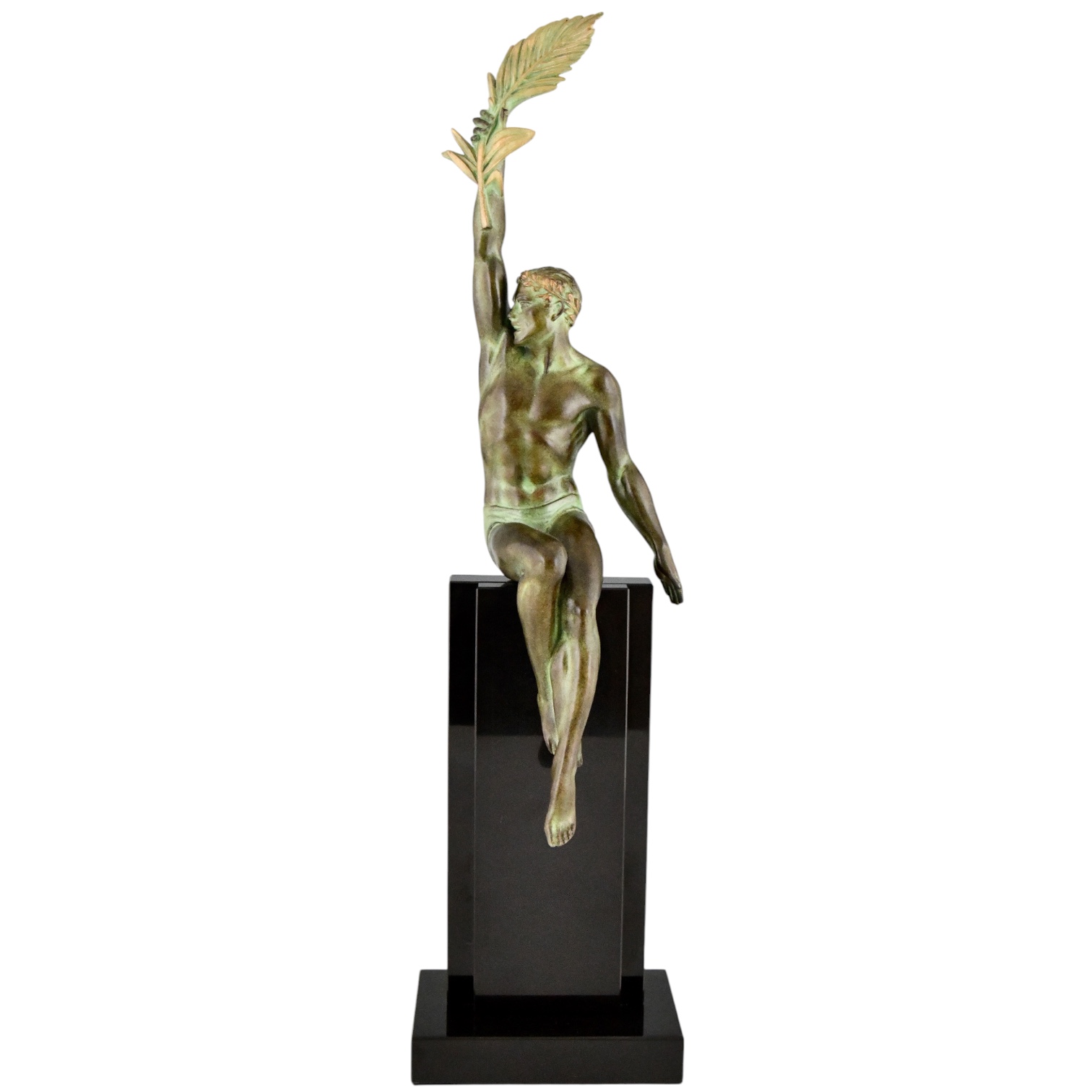
GLOIRE
A male athlete — slender, muscular and sharply stylised — sits upright with an open chest and the head slightly turned. One arm is stretched high above the head, holding a palm leaf: a classic symbol of victory. The other arm hangs lower along the body, making the pose even more stately.

ICARUS
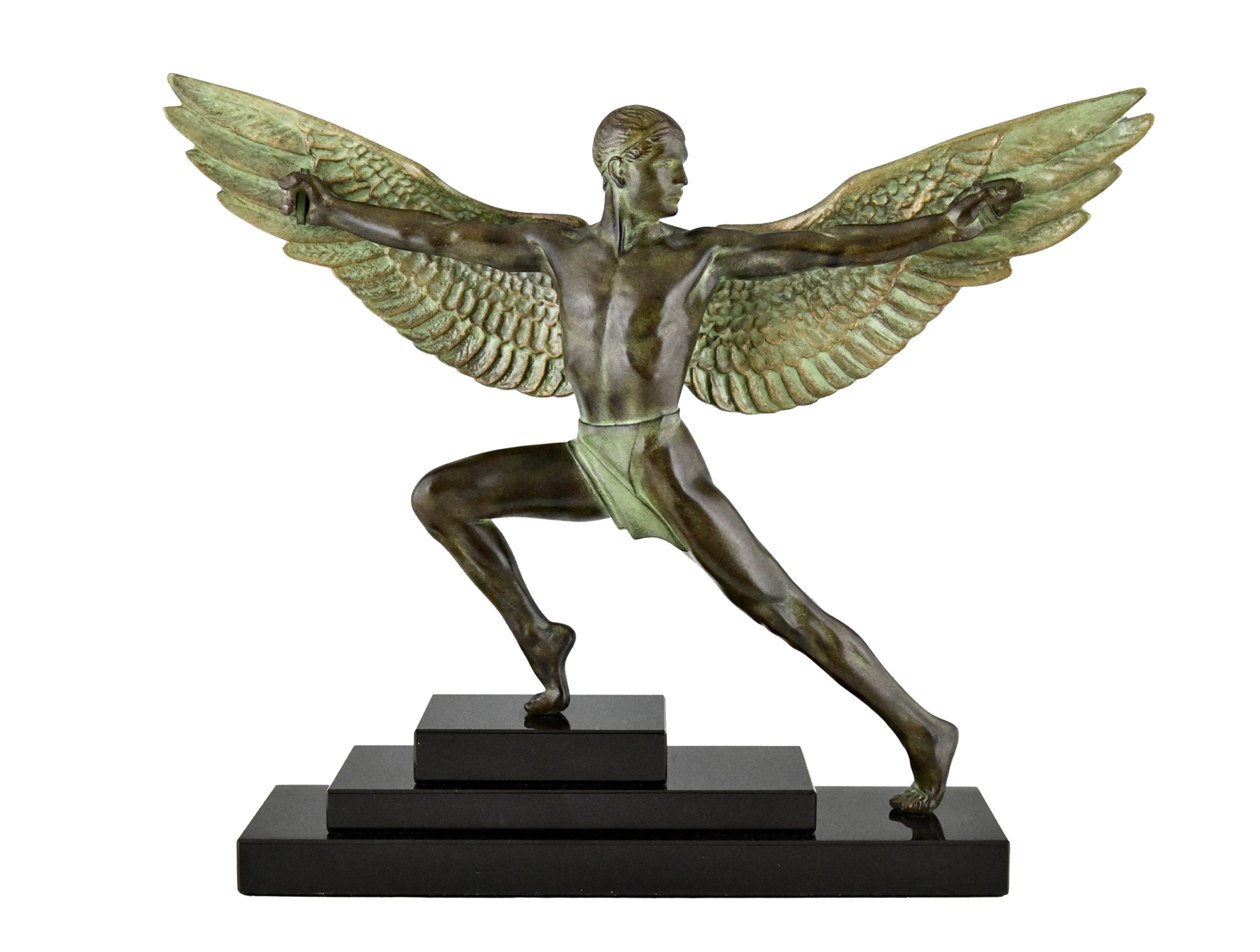
A tribute to ancient Greece, reworked in the style of the 1930s. A nude male figure with large, spread wings opening wide beside the body. The posture is strongly stylised, with clear muscle lines and a powerful, heroic pose, as if he’s preparing to fly.

AMAZONE
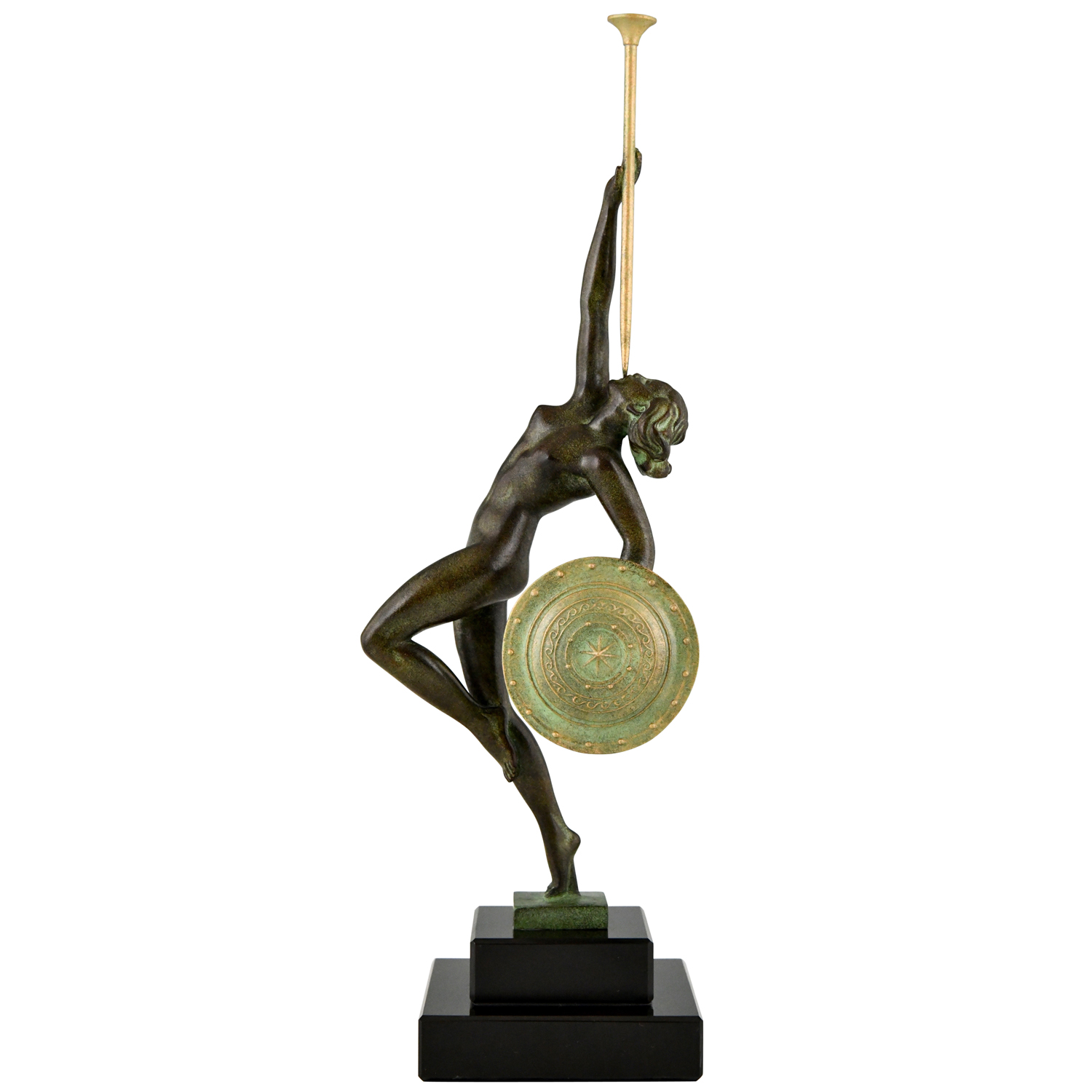
A female figure in a powerful, athletic and dynamic pose. She stands firm, in an active stance: the body is stylised, with long lines and a lean, athletic build. In her hands she holds a spear, adding extra tension to the composition. You can feel she’s about to throw.

Explaining key terms

What is patina?

Patina is a protective colour layer on metal. It gives the sculpture a warm, “aged” look. Max Le Verrier often uses two colours when patinating (often green and brown tones), so light and dark accents add even more depth. That’s how he achieves a true Art Deco feel.

What is a marble base?

The sculptures stand on Belgian black marble, and these bases are made especially for Deconamic. This type of marble has no distracting white veins. The marble base ensures stability and a luxurious effect.

What does “posthumous cast” mean?

A posthumous casting is cast after the artist’s death, using the original moulds and the original design. In the product information, this is clearly stated for each item.

How to choose the best Max Le Verrier sculpture for your interior

Want calm and strength?

Choose a panther. Panthers are sleek, timeless and suit almost any space: on a sideboard, desk or low cabinet. Think OUGANDA or JUNGLE.

Want elegance and lightness?

Choose a dancer. Dancers bring refinement and flow. Models with a ball, ribbon or hoop add a beautiful graphic accent.

Want tension and energy?

Choose a sporty figure, such as AMAZONE. These sculptures feel powerful and dynamic.

Need more information about Max Le Verrier sculptures or help choosing?

Get in touch. We’ll reply as quickly as possible!

Also read our blog to learn more about the artist.